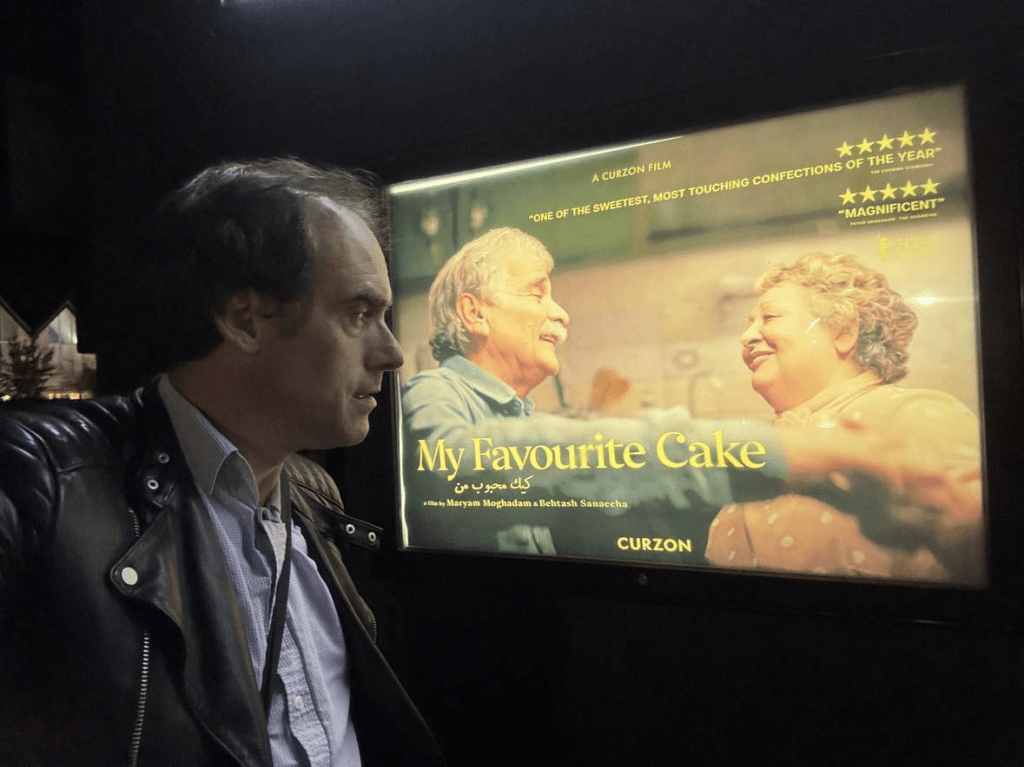
‘My Favourite Cake’ is a tragicomic study of loneliness and transformation, and one of the best foreign language films from recent years not least because of the struggle behind the scenes to get this film released at all. In Iran, this film was banned and was confiscated by the authorities, and the directors were prevented from travelling to Berlin for its premiere. This notion of repression is core to the film where a 70-year old widow Mahin (Lili Farhadpour), who begins each day in bed, never getting up before noon and whose circle of friends is narrowing, and whose children and grandchildren live overseas, finally takes action to extricate herself from her circumstances and begins to discover and enjoy life once again.
The backdrop here is the Morality Police who will take a woman into custody because her hijab is on in the wrong way, and if one of Mahin’s neighbours suspects that she might have a male visitor then they will pry, and Mahin is under no illusion that she will be investigated as an unmarried woman having someone to whom she is not married in her apartment. But, Mahin has nothing to lose, and her attitude is one whereby life has all but left her anyway. Despite having video calls with her daughter, she is not really being listened to, and Mahin decides to grab the bull by its horns and to finally seek what it is that she is looking for – a male companion, in a final act of defiance and the need to be loved and valued.
This is a touching tale of the lengths one might go to in order to change the course of one’s destiny, and it mirrors ‘About Schmidt’ in the way an elderly person, who has lost their spouse of many years, questions the trajectory their life is on and seeks to reclaim something that they lost a long time ago. There is so much of nostalgia in this captivating and charming tale, as Mahin remembers the days before the repressive, totalitarian regime and tries, for once, to carve out her own future existence and to seize back something resembling an authentic existence. But, there is also a strong bittersweet element to this film, as Mahin has a fleeting, liminal space within which to experience joy once more.
There is a poignant and moving episode towards the end – a fly in the ointment, no less – where Mahin’s project appears to have been stopped in its tracks. But, we also sense that she doesn’t regret having had the means, albeit temporarily, to chase a dream she has been harbouring against a backdrop of repression, and her quiet defiance has paid off in this elegiac tale which explores how in a world of oppression there is still the capacity to find and – albeit fleetingly – enjoy true love.



 Chris Deacy
Leave a comment