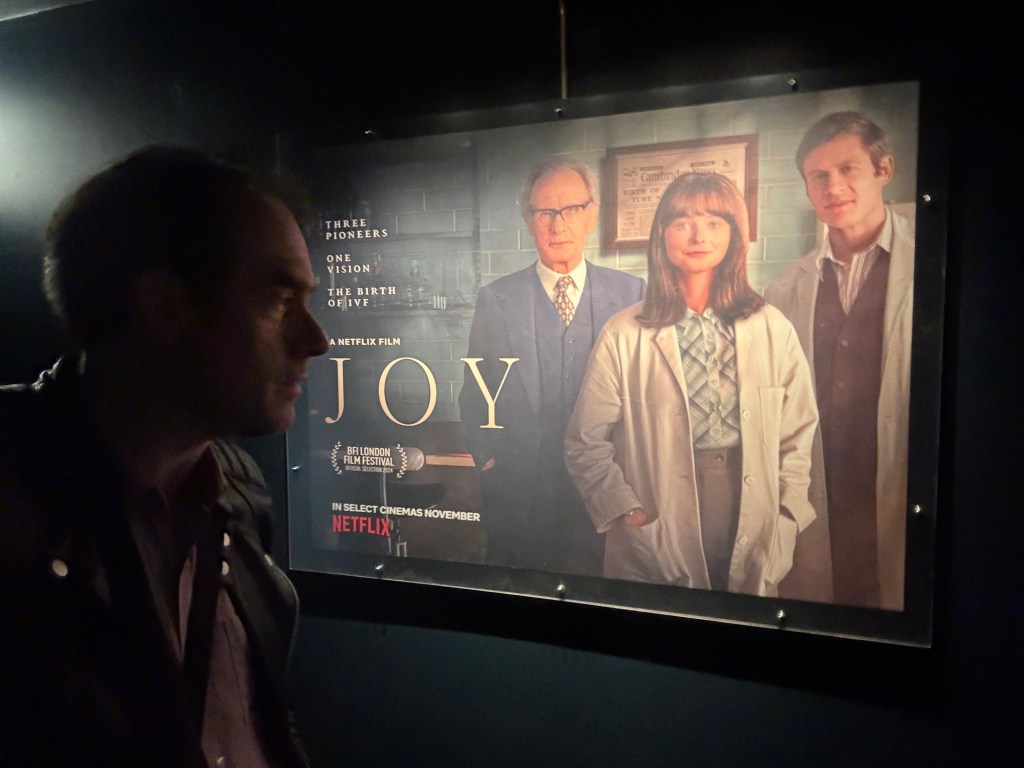
‘Joy’ is an exceptionally good character-driven drama about the race to create the world’s first test tube babies, with battles against the medical establishment, family and the Church. Set between the late 1960s and the birth of Louise Brown in 1978, we follow three trailblazing scientists whose research is pilloried within their profession as well as on the media as they seek to try and overcome the stigma of childlessness and accusations that the country is already overpopulated, and bring a little joy, as the title suggests, to infertile couples.
The film focuses on the heartache that attends the families at the heart of what functions as a race against time thriller in places, as so many of the pregnancies end in failure, leading to all kinds of tweaks and even an abandonment of the entire research programme, based in the external, disused outhouse of an Oldham hospital, where the effort to bring life was also blurred in the popular imagination with the choice to end life via abortion. The fertility science is explained in sufficiently detailed terms to ensure that we are watching an actual medical investigation, while also according sufficient attention to the personal lives and family pressures of the three leads.
All throughout the research is the challenge that the children that will be born from IVF will turn out to be deformed, with pioneering biologist Robert Edwards (James Norton) caricatured in the media as ‘Dr. Frankenstein’. One of the trio, embryologist nurse Jean Purdy (Thomason McKenzie), is herself childless, and we see the personal angle to the research for her, as she also has to battle a reactionary mother (sensitively played by Joanna Scanlon) whose religious faith does not permit her to countenance the creation of artificial lives. We are also privy to some tender, engrossing details as when we see Jean and Robert stopping off at a roadside café for brunch on their regular trips to or from Oldham, and it is these very human and relatable sequences that give ‘Joy’ their heart.
We see the endemic sexism in the scientific community in its day, and it is not without note that the only female member of the team was literally written out of history by not having her name on the plaque at Oldham Hospital until many years after she had died from cancer. The star of the show, though, is Bill Nighy as the surgeon who is instrumental to the research’s success. He has a permanent curmudgeonly scowl but which masks a very kind heart, and Nighy is here channelling the repressed municipal character he played in ‘Living’ where again there is a hinterland beneath the gruff exterior, and when we see it the film dares us not to shed a tear.

 Chris Deacy
Leave a comment