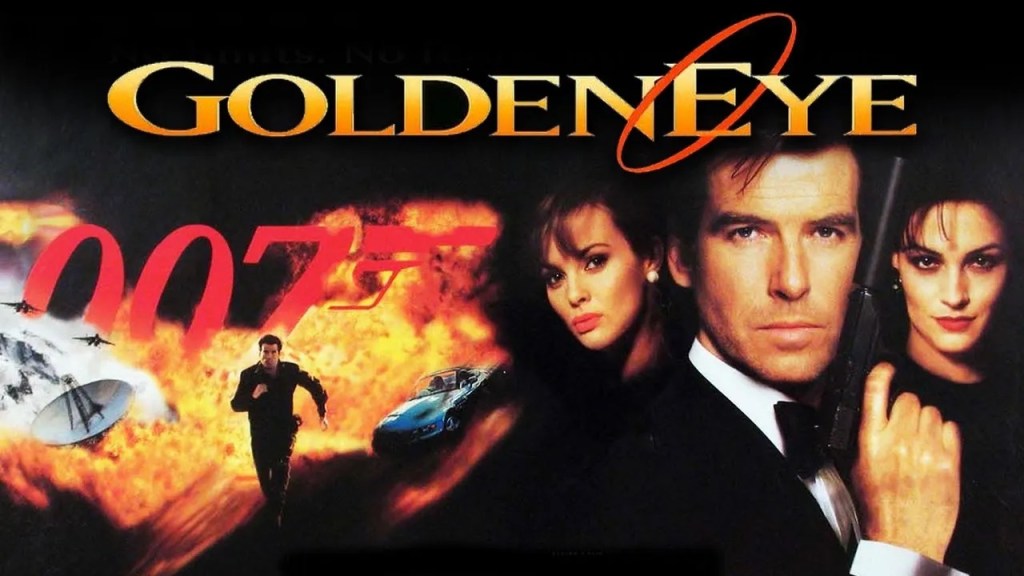
‘GoldenEye’ marks Pierce Brosnan’s debut as James Bond, and it’s a confident if uneven relaunch of the franchise. Brosnan has the same kind of suave charm and quick wit that Roger Moore was famous for, but with more virility and steel. The film is loaded with sexual innuendo and knowingly self-referential humour – and when Judi Dench’s M calls Bond “a sexist, misogynist dinosaur and a relic of the Cold War,” the line feels both like an accusation and an affectionate nod to the character’s history. The irony is that after making the point, the film simply carries on in the same spirit – Bond is still the same womanising, unflappable hero he always was.
There’s an interesting post-Soviet dimension to GoldenEye, the first Bond film made after the collapse of the Eastern Bloc. The previous entry, Licence to Kill, came out in 1989, so the series had to reinvent itself in a world without the Cold War. Here, espionage gives way to technology and surveillance. The plot revolves around attempts to hack into missile systems and warheads, with Alan Cumming on typically scene-stealing form as a nerdy, overconfident computer hacker. Meanwhile, Sean Bean plays a double agent whose apparent death early on conceals his real agenda. His character, Alec Trevelyan (006), is fascinating as a kind of dark reflection of Bond himself, much as Timothy Dalton’s ‘Licence to Kill’ suggested what might happen if a secret agent ever went rogue.
The GoldenEye of the title is a Soviet satellite weapon designed to destroy the world’s financial system – a plotline later echoed in ‘Tomorrow Never Dies’. It doesn’t make much sense, but it hardly matters: the film is stylish, sleek, and briskly entertaining. The villains are pure Bond excess, from the megalomaniacal Trevelyan to Famke Janssen’s memorably named Xenia Onatopp, whose weapon of choice is literal physical intimacy.
There are also some wonderfully over-the-top moments, none more iconic than Bond driving a tank through the streets of St Petersburg, casually flattening everything in his path. Sean Bean’s performance has echoes of his turn in ‘Patriot Games’ – another role steeped in betrayal, vengeance, and obsession – and he makes an ideal foil for Brosnan’s cool precision.
Yet for all its spectacle, ‘GoldenEye’ can feel curiously hollow. The editing is fast, the pace relentless, but there’s little emotional weight; Bond always wins, always gets the girl, and always knows it. It’s a formula that works, but it leaves little room for reflection or vulnerability. Still, the mixture of high-tech villainy, Cold War nostalgia, and tongue-in-cheek swagger proved irresistible.
It’s easy to see why ‘GoldenEye’ revitalised the series for the 1990s – and why, just a few years later, ‘Austin Powers’ would parody this exact template of suave spies, absurd names, and doomsday devices. All the classic Bond ingredients are here – the villain’s lair, the explosions, the near-death escapes – and while it may lack heart, ‘GoldenEye’ delivers the spectacle with confidence and style.
 Chris Deacy
Leave a comment