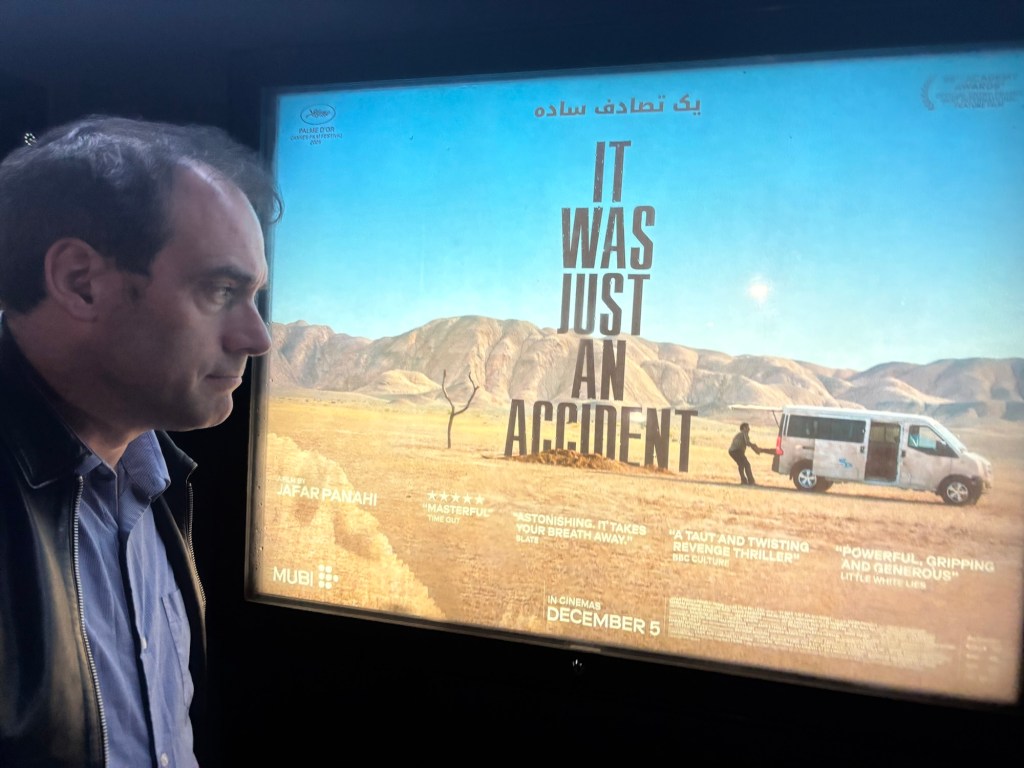
This is one of those films that quietly pulls you in and then completely blindsides you. It begins with what looks like an ordinary family – a couple expecting a baby, their daughter in the back seat – driving through a rural landscape. Everything feels normal… until their car accidentally hits a dog on the road. They head to a local garage for repairs – and that’s when the story reveals its true, unsettling nature.
The mechanic recognises the father. Or thinks he does. Suddenly, panic takes over – because he’s convinced this man once tortured him while he was held captive years earlier. But here’s the catch: during that abuse, he was blindfolded. He never actually saw his tormentor’s face.
So begins a darkly comic, morally disturbing odyssey: the mechanic shoves the supposed abuser into a crate in the back of his van and drives around seeking confirmation – visiting others who might help identify him. Some refuse to take revenge, frightened of becoming the very thing they hate. Others argue he should be killed immediately. Everyone has an opinion. No one is certain.
Then comes a horrible twist of conscience: the captive man’s young daughter phones – his pregnant wife has collapsed, possibly in danger. Is this a trap? Or does compassion override vengeance?
What unfolds feels like a wickedly modern Hitchcock thriller – it’s been compared to ‘The Trouble with Harry’ – mixing suspense with absurdist social satire. Everyday life barges in at every moment: a hospital that won’t help without payment, security guards more concerned with bureaucracy than saving lives, and even a wedding photoshoot happening while a man in a van is awaiting possible execution. It’s grotesque. It’s funny. It’s horrifying.
At its core, the film wrestles with profound questions: Can trauma ever truly be buried? If someone was once a monster, might they now be a different person? And does revenge heal anything – or simply reopen wounds?
The ordinary people here turn into potential killers because of a sudden trigger – a flash of memory that overwhelms years of trying to carry on normally. And yet, the supposed villain also has a family, a future, a softness that complicates everything.
Directed by a filmmaker who himself has spent years imprisoned and has openly criticised authoritarian rule in his native Iran, the film burns with moral urgency. It interrogates justice, identity, forgiveness – and the terrifying possibility that certainty may be impossible.
It is no surprise, then, that ‘It Was Just An Accident’ won the Palme d’Or at Cannes. It’s bold, original, and brilliantly uncomfortable – a story where everyday life and deep trauma collide in the most unpredictable ways.
 Chris Deacy
Leave a comment