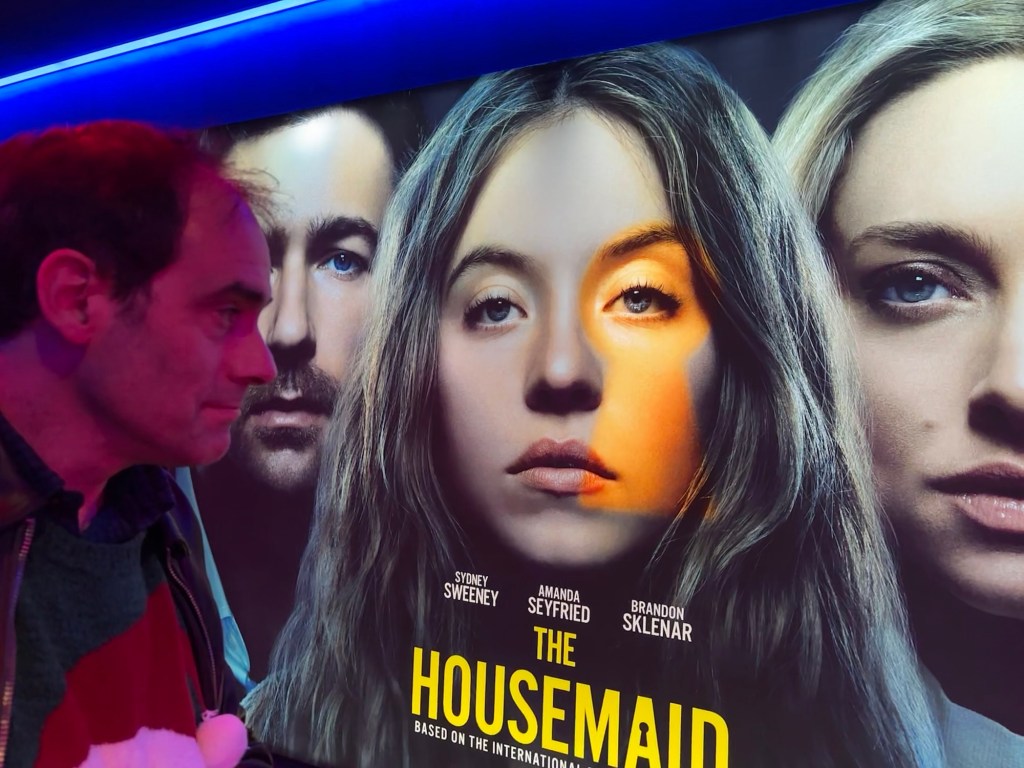
‘The Housemaid’ is a glossy, pulpy thriller that deliberately harks back to the great paranoid domestic dramas of the 1990s — films like ‘Single White Female’, ‘Pacific Heights’, and ‘The Hand That Rocks the Cradle’. It’s knowingly retro in that sense, and it largely works because it understands the pleasures of misdirection.
The film opens deceptively simply. Millie, played by Sydney Sweeney, arrives at a vast Long Island mansion for an interview as a housekeeper. Her potential employer, Nina Winchester, played by Amanda Seyfried, seems polished and affluent, the house immaculate, the arrangement straightforward. But almost immediately there’s a sense that Millie doesn’t belong – and that she herself is hiding something.
The first major reveal comes quickly: Millie is on probation, effectively homeless, and desperate. She’s stunned to be offered the job, convinced that a background check would expose the lies on her CV. At first, we assume this secret explains everything. But when Millie turns up on her first day, the film pulls the rug again. The pristine mansion is now a wreck, and Nina reveals herself to be volatile, erratic, prone to screaming fits and violent outbursts. Her young daughter is clearly distressed, and Nina becomes increasingly paranoid that Millie is attracting the attention of her handsome husband.
From here, the film steadily peels back layers, constantly shifting our sympathies. Seyfried is excellent at portraying a woman who has married into wealth and learned how to perform perfection – hosting cocktails, smiling through clenched teeth – while slowly unravelling. But just when we think we know what kind of film this is, another turn arrives, and the story veers into much darker, more unhinged territory.
By the final act, ‘The Housemaid’ has become almost a different film altogether, plunging headlong into full-blown psycho-thriller territory. There are affairs, manipulation, abuse, kidnapping – and the realisation that there has always been a third, unseen player shaping events from the shadows. Watching earlier scenes through this new lens is part of the fun, and the audience I saw it with gasped and laughed in all the right places.
What’s clever is that the woman with the criminal past isn’t the obvious villain. Unlike ‘The Hand That Rocks the Cradle’, the “outsider” isn’t the monster – she’s the one being groomed. The question becomes: by whom, and to what end? There’s an intriguing undercurrent about whether we can ever really outrun our pasts, or whether they’re the very things that make us useful to others.
Directed by Paul Feig, who made ‘A Simple Favor’, the film leans heavily into pulp. There’s plenty of violence and misogyny, and mental health issues are treated with a bluntness that might raise eyebrows today – but that, too, feels like part of the throwback. This is a film that knows exactly what it is.
It’s slick, trashy, knowingly excessive – and thoroughly gripping. If you’re nostalgic for those lurid, twist-heavy thrillers of the 1990s, ‘The Housemaid’ delivers exactly that kind of guilty pleasure.




 Chris Deacy
Leave a comment