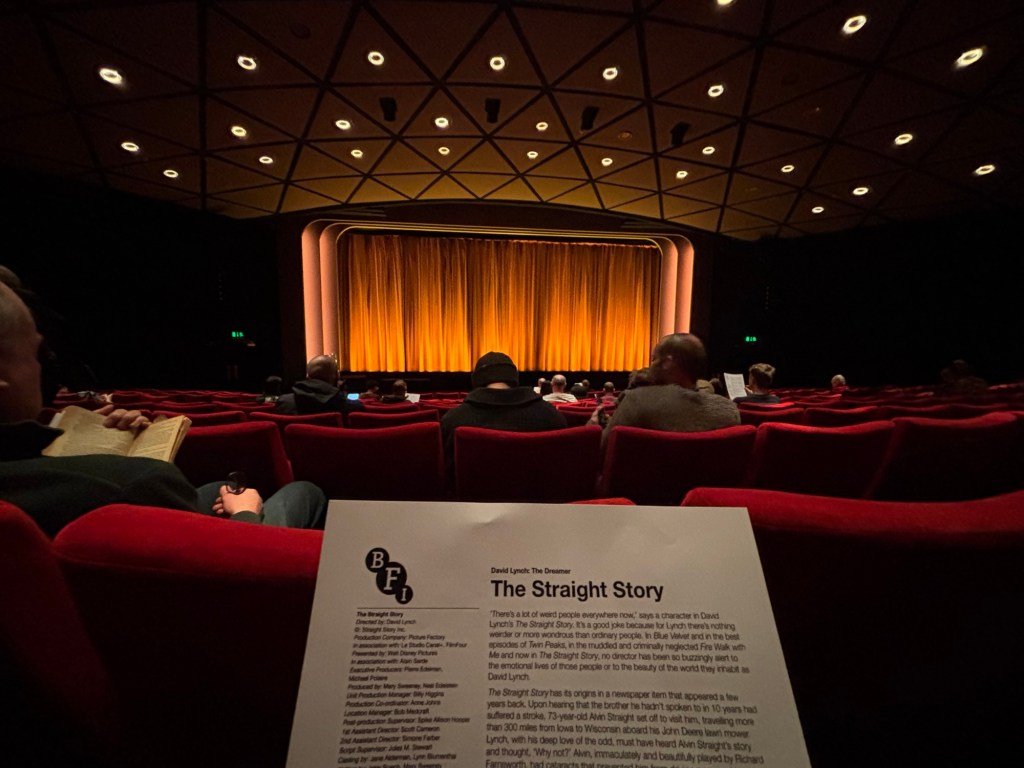
When ‘The Straight Story’ was released in 1999, there was a sense of surprise, even disbelief, that this was a film directed by David Lynch. It seemed so ordinary, so gentle, that it felt almost radical by contrast. But in many ways, it fits perfectly with Lynch’s long-standing fascination with small-town America and what lies beneath the white-picket-fence surface.
This is a true story about Alvin Straight, a 73-year-old man who travels hundreds of miles across several states on a lawn tractor to reconcile with his estranged brother. The journey takes weeks, and here the old adage – that the journey matters more than the destination – could not be more apt. Alvin knows time is running out, and this slow, stubborn pilgrimage is his way of making amends.
Alvin is a World War II veteran, a man shaped by hardship and experience, and along the way he shares quiet life lessons with the strangers he meets. One encounter, with a troubled teenage girl, prompts her to rethink her own understanding of family and responsibility. There’s a deep decency to Alvin – a striking contrast to the darker, more venal characters Lynch has explored elsewhere, such as Dennis Hopper’s terrifying Frank in ‘Blue Velvet’.
At heart, this is a film about the kindness of strangers. The ending is deliberately understated – there’s no dramatic flourish – but that restraint is exactly what makes it so satisfying. When Alvin finally reaches his destination, the emotional payoff is quiet but profound, and audience I saw this with at the BFI registered a shock of recognition when his brother is revealed.
This is a road movie in the purest sense, but it’s not a buddy film, not an ensemble piece, and not surreal or voyeuristic. It’s a simple tale of reconciliation, stripped of stylistic excess. Farnsworth’s Alvin lives by a strict personal code: he won’t accept help, won’t use public transport, won’t even step inside someone’s house while his tractor is being repaired. This journey must be made alone, and on his own terms.
Curiously, there are no flashbacks. There is a powerful spoken recollection of a traumatic wartime experience involving a sniper, but we never see a younger Alvin. Everything unfolds in the present. Reflection and memory are conveyed through words rather than images – and they are sufficient.
‘The Straight Story’ may lack the shock and strangeness often associated with Lynch, but it remains deeply moving: a quiet, humane film about dignity, regret, and the small, meaningful acts that define a life.



 Chris Deacy
Leave a comment