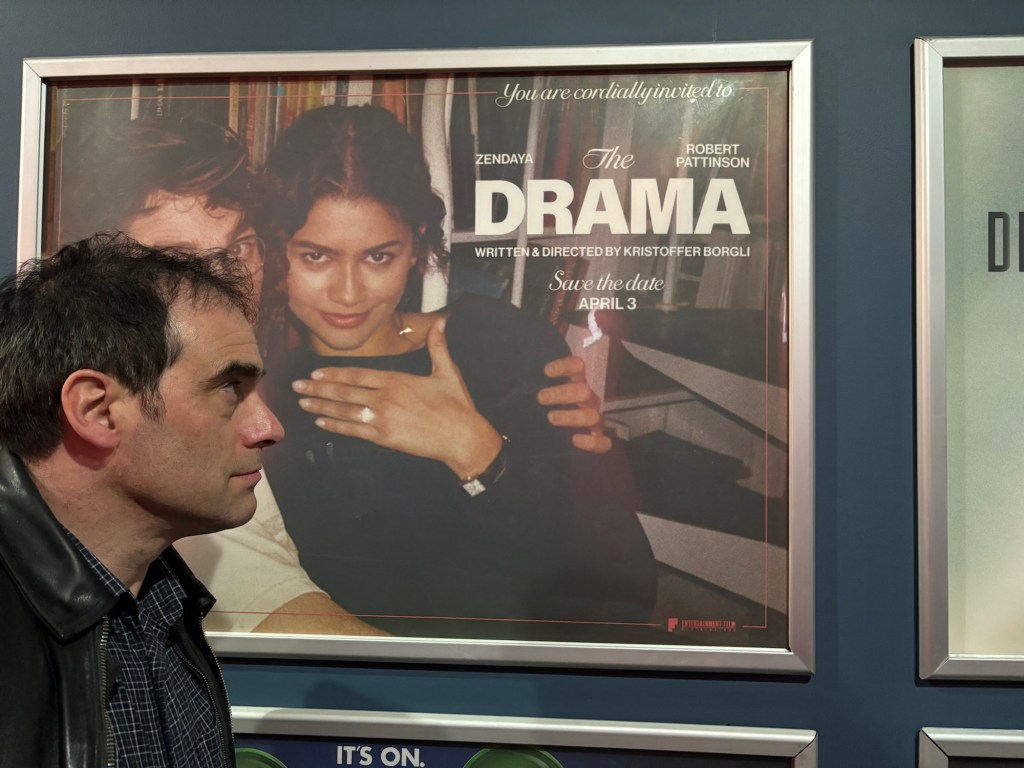
This is a film that certainly lives up to its title. At times ‘The Drama’ is almost excruciating to watch. We follow an engaged couple who, just days before their wedding, are thrown into crisis by a deeply unsettling revelation. Emma, played by Zendaya, confesses to something she almost did when she was 15 – something genuinely disturbing – and suddenly Robert Pattinson’s Charlie is forced to confront whether this is something he can live with in the woman he’s about to marry. The confession comes in a drunken moment of honesty, but its consequences are anything but fleeting.
What’s fascinating is that the film isn’t really about the act itself, but about the fallout. Like a butterfly effect, this revelation seeps into every aspect of their relationship, destabilizing everything. Charlie’s response – clumsy and emotionally volatile – only escalates matters, as he effectively throws a hand grenade into an already fragile situation. The film raises uncomfortable questions: Are we still the people we were ten years ago? Should we be judged for things we considered doing but never actually did? And how much do our past experiences – bullying, isolation, exclusion – shape those darker impulses?
Crucially, Charlie himself is not without fault. He comes close to making a similarly reckless decision, and even though he doesn’t follow through, the fact that he considers it complicates his moral position. Nobody here is innocent; everyone carries their own flaws and contradictions. The film shifts between timelines, reinforcing the idea that identity is fluid and unstable – that the person we present to the world may be very different from who we are internally.
At its core, ‘The Drama’ asks what happens when there’s a fracture between the life we project and the truth we conceal – and whether even our closest relationships can survive that gap. Charlie remains something of an enigma, insofar as we see his reaction, but don’t fully understand his past, which adds to the unease. This feels like the kind of film that will be dissected in ethics classes for years to come, particularly in how it exposes hypocrisy. Emma, for instance, is quick to judge others – wanting to fire a wedding DJ over suspected drug use – while harbouring her own far darker secret.
Ultimately, the film circles around a fundamental question: how much of ourselves are we obligated to reveal, and what happens when the truth emerges too late? Charlie may still have a chance to walk away, but with the wedding imminent and families gathered, that decision becomes increasingly fraught. And perhaps most unsettling of all is the suggestion that the person sitting next to us – or even ourselves – may not be as morally certain as we like to believe.


Leave a Reply