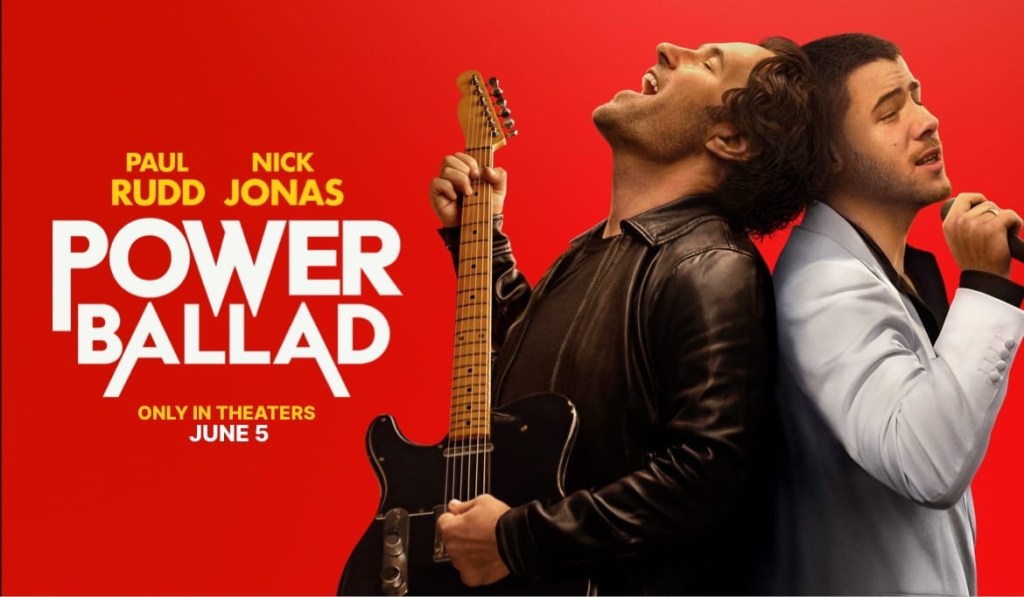
I thought ‘Power Ballad’ was a magnificent film about a wedding singer who inadvertently comes close to the success he always dreamed of after a song he wrote is effectively stolen during a late-night jam session and transformed into an international number-one hit by somebody else. One slight weakness is that some of the musical sequences are not especially well edited – there are moments when it’s obvious the performers are not actually singing in sync with the vocals. But that hardly diminishes what is otherwise a highly engaging and surprisingly thoughtful comedy about music, ambition and the ways songs connect us.
Paul Rudd plays a former aspiring rock star who once dreamed of playing Madison Square Garden but instead settles into a quieter life in Dublin. He marries, raises a daughter and performs with a wedding band, playing mostly cover versions for audiences who want familiar hits rather than original material. Every now and then he slips one of his own songs into the set, though this is generally frowned upon. Ironically, it is one of those songs that becomes the source of his greatest opportunity.
What works so well is that the film avoids turning the story into a straightforward tale of theft or plagiarism. Instead, it presents two musicians at very different stages of their careers. One is a former boy-band member trying to sustain a solo career and remain relevant, while the other is a man who quietly gave up on his dreams years ago. The song at the centre of the dispute – ‘How to Write a Song Without You’ – was written by Rudd’s character when his daughter was young, and it carries genuine emotional meaning for him.
The real conflict is not about money so much as recognition. All he wants is acknowledgement that he wrote the song. But when he contacts the singer’s representatives in Los Angeles, he is met not with gratitude but with threats from lawyers. That response reignites something within him and sends him on a quest to reclaim the credit he feels he deserves.
The film raises interesting questions about creative ownership, artistic integrity and the nature of fulfilment. Is playing to tens of thousands of people in a stadium really the ultimate measure of success? Or can a life built around family, friendship and local community be equally meaningful? There is something here that will resonate with anyone who once had ambitions that never quite materialized.
At times the film recalls ‘Yesterday’ – set in a parallel universe where The Beatles doesn’t exist, so the only person with memory of the Fab Four passes off their music as his own – with its exploration of who truly owns a song and whether art changes when detached from its original creator. But ‘Power Ballad’ ultimately takes a gentler and more reflective approach. It suggests that music is not always created for fame or mass audiences. Sometimes songs are written for the people we love, and their value may lie not in how many people hear them but in why they were written in the first place.
Beneath its humour and warmth, the film becomes a moving meditation on middle age, unrealized dreams and the possibility that success may look very different from what we imagined when we were young.


Leave a Reply