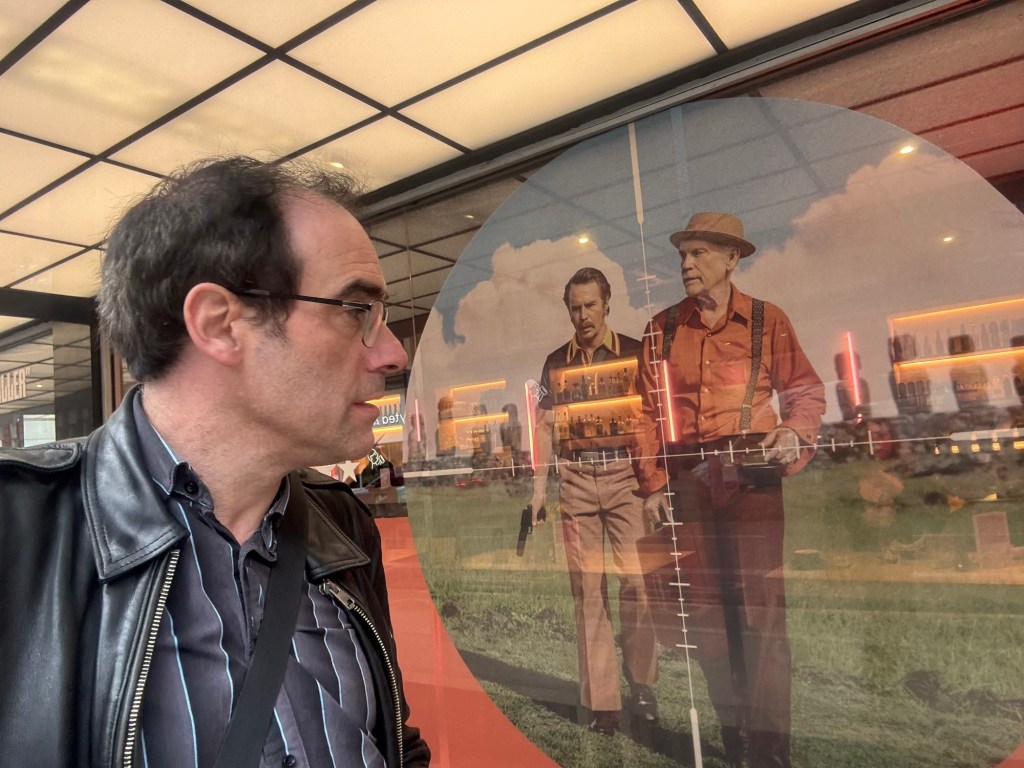
Martin McDonagh has always been fascinated by men who have done terrible things and are nevertheless capable of being rather funny. In ‘Wild Horse Nine’, the director of ‘In Bruges’ and ‘The Banshees of Inisherin’ returns to familiar territory: two ageing, morally compromised men exchanging insults, philosophical observations and increasingly uncomfortable truths about their past.
At first, it’s difficult to know quite where the film is going. There’s a great deal of banter, much of it amusing, between two rather weather-beaten characters whose relationship seems to be built on decades of mutual irritation and shared secrets. Gradually, we discover that they’re connected to the CIA and are heading to Cuba in 1973, carrying with them a history of clandestine operations, political intrigue and possible involvement in the Kennedy assassination.
The question isn’t simply what they’re doing there, but whether either of them is going to come back alive. John Malkovich plays Chris, a veteran operative who has spent much of his life doing things that respectable governments would prefer to deny ever happened. Now he’s dying of cancer, and his failing memory is making him increasingly conscious of the past. He wants to write his memoirs, much to the alarm of his superiors, who understandably worry about what he might reveal.
Chris even considers beginning his autobiography with dinosaurs, reasoning that this might make his life story more appealing to readers. The conversation somehow extends to whether dinosaurs go to heaven. It’s a wonderfully McDonagh-like digression: absurd, funny and, beneath the surface, rather more pertinent than it initially appears.
Indeed, ‘Wild Horse Nine’ is ultimately preoccupied with precisely that question. Who gets into heaven? And can somebody who has spent his life committing terrible acts ever hope to find redemption? Chris is particularly interested in the Catholic prohibition against suicide. He has asked his companion Lee (Sam Rockwell) to kill him, apparently hoping to exploit a theological loophole that would allow him to die without technically taking his own life.
There’s something simultaneously ridiculous and deeply sad about a professional killer worrying about the spiritual consequences of his own death. After decades of deciding whether other people live or die, Chris wants at least some control over how his own story ends. That’s considerably more than he ever offered his victims.
I was reminded less of conventional espionage thrillers than of Clint Eastwood’s ‘Unforgiven’. With its wide-open landscapes, horses and ageing men confronting the consequences of violence, ‘Wild Horse Nine’ feels like a Western displaced into the world of Cold War intelligence. Chris is essentially an old gunslinger reaching the end of the trail, looking back at a lifetime of killing and wondering whether any of it amounted to something worthwhile.
At one point, Chris tells Cuban students that political marches are ideal opportunities for governments to obtain clear photographs of demonstrators without their knowledge. It’s a characteristically cynical observation, funny precisely because it reveals how completely he understands the machinery of state surveillance.
But beneath the verbal fireworks lies something more melancholy. Chris wants to tell his own story, yet how reliable can that story possibly be? He’s spent decades deceiving governments, colleagues and enemies. His memory is deteriorating, and he has every reason to present his actions in a more flattering light. The man who has manipulated history now wants to become its narrator.
McDonagh doesn’t ask us to believe that these are fundamentally decent people. They aren’t. Yet the film somehow encourages us to hope that they might achieve a measure of peace. Their relationship becomes a vehicle for exploring guilt, regret, mortality and the uncomfortable possibility that self-knowledge may arrive too late to change anything.
For all its political intrigue, ‘Wild Horse Nine’ is less interested in the secrets of the Kennedy assassination than in the secrets people keep from themselves. Chris has spent his life deciding how other people’s stories end. Now, facing the end of his own, he’s discovering that the hardest thing isn’t choosing how to die. It’s deciding how to account for having lived.


Leave a Reply