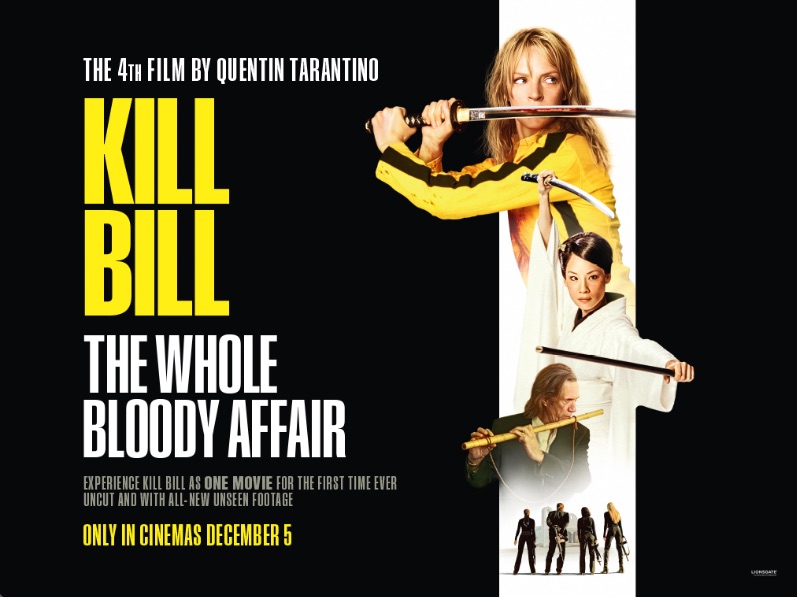
Two decades after Quentin Tarantino first promised it, ‘Kill Bill: The Whole Bloody Affair’ finally arrives – the definitive, single-cut fusion of Vol. 1 and Vol. 2. It runs four hours and 41 minutes and feels like one long, wild, cinephile dream: a revenge epic stitched together from Tarantino’s encyclopedic love of B-movies, kung fu sagas, samurai cinema, spaghetti westerns, anime, and grindhouse pulp.
Uma Thurman’s character – known only as The Bride – is left for dead after her entire wedding party is massacred. Pregnant at the moment of her attempted murder, she awakens from a coma with one purpose: track down the people who betrayed her and make them pay. And with all the operatic fury of myth, she does just that – ripping through assassins, crime clans, and entire rooms of henchmen in spectacularly choreographed fashion.
Seeing the two volumes combined completely changes the rhythm. What originally felt like a huge “twist reveal” in Volume 2 – the shocking news of her baby’s fate – now becomes something we wait for right up until the end. The film transforms from a fragmented saga into a single odyssey of survival, empowerment, and maternal rage.
Stylistically, it’s a prelude to Tarantino’s later genre-mashers like ‘Django Unchained’ – broad widescreen canvases, East-vs-West collisions, and bold visual experimentation. Yet some of its most striking sequences remain intimate and domestic: the first and final showdowns unfold inside homes, not on grand battlefields. Revenge here is personal, not abstract.
There’s also a fascinating moral mirroring: both the Bride and Bill kill innocents along the way. This is a comic-book empowerment fantasy – long before Wonder Woman or Captain Marvel – but Tarantino isn’t shy about the moral greyness. Violence is a means of escaping violence, not a heroic calling. The Bride doesn’t love brutality – she’s fighting her way back to domesticity, not away from it.
Despite the running time, there are huge mysteries left unexplored. We never really understand the origins of her relationship with Bill – the age gap, the attraction, the power dynamics. In a film so sprawling, it’s striking how much remains off-screen, how much of their past is left for us to imagine.
Like ‘Pulp Fiction’ and ‘Jackie Brown’, there’s a nod to redemption narratives – characters who only find morality when confronted with parenthood. One assassin retreats from the life the moment she discovers she’s pregnant – a biblical turning point straight out of an Old Testament parable. Tarantino gives us female heroism where motherhood and myth collide.
‘The Whole Bloody Affair’ is exactly that: mythic, messy, magnificent. A stylised journey through hell and back – a hyper-violent hero’s journey where the promised land isn’t revenge, but the hope of going home.




Leave a Reply