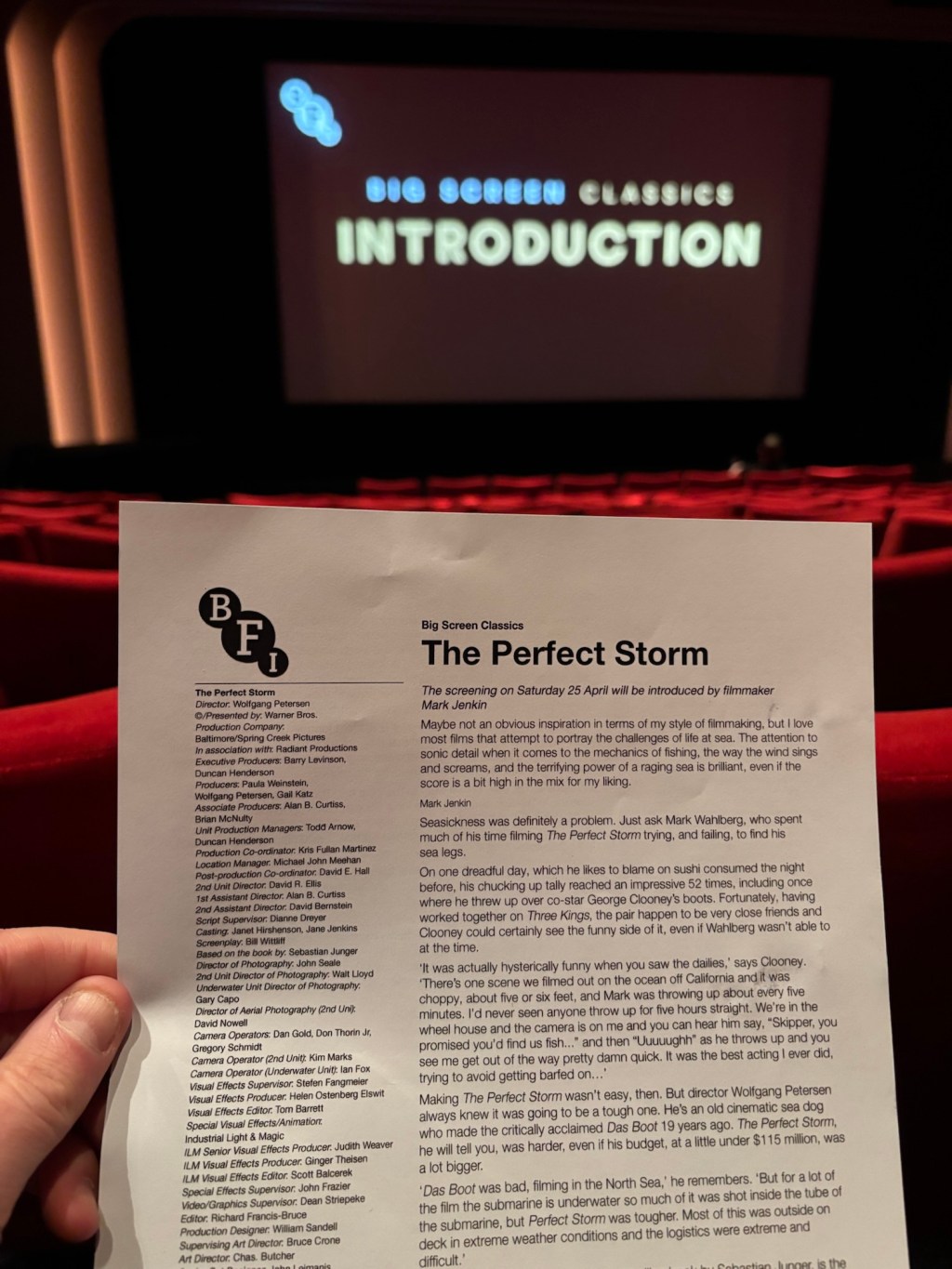
I’ve seen ‘The Perfect Storm’ twice on the big screen, 26 years apart, and I have to say I was underwhelmed the first time I saw it back in August 2000. Directed by Wolfgang Petersen, who had previously made suspense-driven thrillers like ‘In the Line of Fire’ and ‘Outbreak’, this time the antagonist is not a virus or a would-be assassin, but nature itself – Hurricane Grace.
Admittedly, I went in expecting a different kind of ending, but without giving anything away, this film remains faithful to the real-life events surrounding the Andrea Gail, caught in a devastating North Atlantic storm in 1991. If you’re expecting a last-minute rescue, you’ll be disappointed. There’s no miracle here, other than the miracle of human endurance and hope in the face of adversity.
At the centre is the boat’s captain, played by George Clooney, who pushes his crew further and further out to sea, to the perilous fishing grounds of the Flemish Cap. There’s something almost Captain Ahab-like in his determination – obsessive, driven, and ultimately dangerous. The crew follow him, partly out of loyalty, partly because this is the life they know. The choice they face is stark: risk everything for a big catch, or return home empty-handed.
Back on shore, we see the emotional stakes through those left behind, including Diane Lane, who is starting out in a relationship with Mark Wahlberg’s character, and he sees this as one last trip before starting a new life. There’s a familiar narrative here – the idea of one final gamble before escape, reminiscent of Al Pacino in ‘Carlito’s Way’. This is the familiar movie trope of the one, final act of recklessness before going straight, and we can imagine how it might all play out.
The film spends time developing its characters, but once the storm hits, it becomes, in a sense, literally all at sea. The score by James Horner is rather heavy-handed, underlining every emotional beat and crashing wave. The special effects, while ambitious for their time, don’t always convince, and I found myself less invested in the spectacle than perhaps intended.
There’s an underlying theme of ordinary people engaged in dangerous work, and the pull that lifestyle exerts – not just on those who live it, but on those who love them. There’s even an echo of John Carpenter’s horror classic ‘The Fog’ in the way the community seems haunted by the loss of men at sea. But for all its scale, I found myself oddly detached, never quite as moved as the film clearly wanted me to be.




Leave a Reply