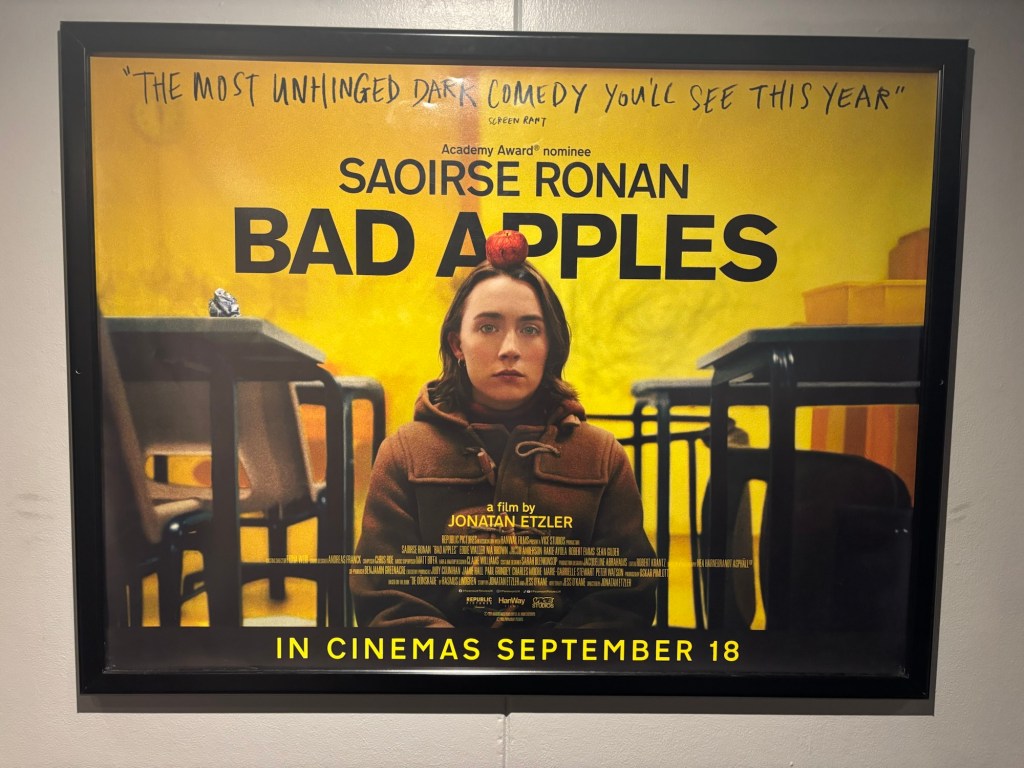
As somebody who works in a school, I found ‘Bad Apples’ fascinating because underneath its increasingly ridiculous premise is a dilemma that many teachers will recognize: what happens when the needs and behaviour of one child begin to overwhelm the education and wellbeing of everybody else?
Saoirse Ronan plays Maria, a young teacher still finding her feet in the profession. She has all the usual aspirations about developing young minds, but then there’s Danny (Eddie Waller). Danny doesn’t simply misbehave; he creates chaos. Maria struggles to control him, her classroom becomes unmanageable and eventually he even throws another pupil from a balcony. The film rather overplays its metaphor when, on a school trip to a cider factory, Danny throws a trainer among the apples and spoils them. One bad apple, you see.
Things then become considerably darker when Maria ends up imprisoning Danny in her basement. This is clearly not an intervention you’re likely to find in any school behaviour policy. Yet something extraordinary happens: everything gets better.
Without Danny, Maria can teach. The other pupils can learn. Her confidence grows and even the inspectors are impressed. It’s here that ‘Bad Apples’ becomes a provocative satire of education because Maria has achieved precisely what everybody wanted from her. There’s just the small matter of the missing child in her basement.
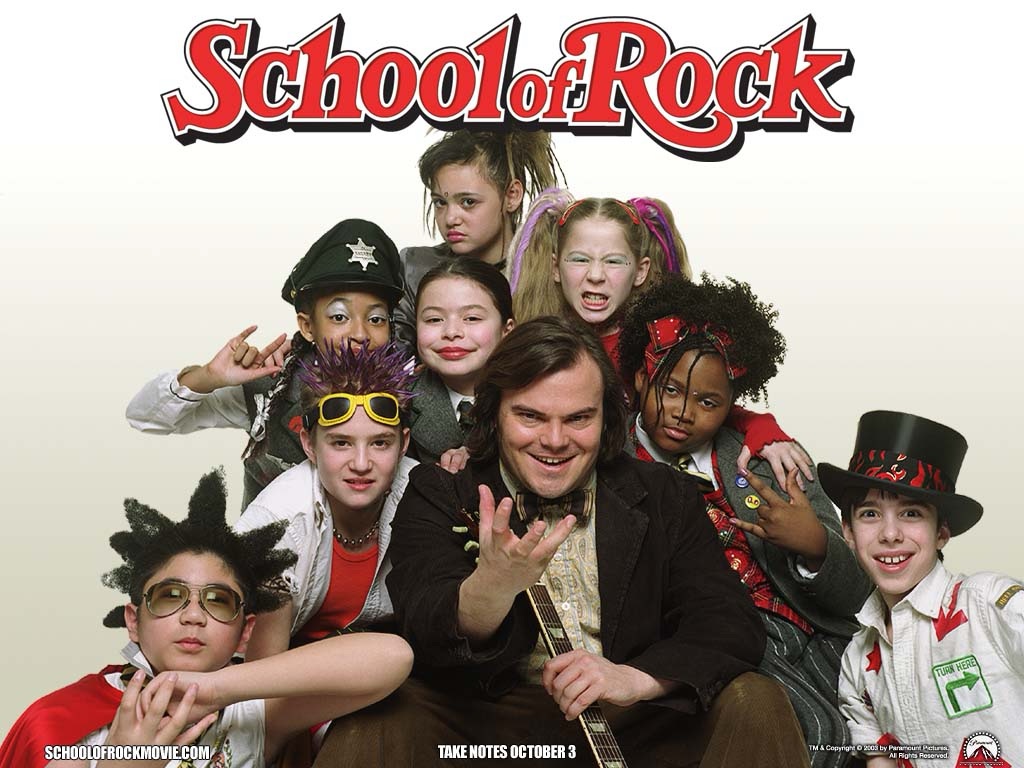
The safeguarding holes are so enormous that they make ‘School of Rock’ look like an instructional video for trainee teachers. There, Jack Black takes an entire class out in his van without anybody noticing. Here, a child disappears while his teacher secretly keeps him prisoner.
At times, with Danny chained up in a dingy basement, I felt as though I’d wandered into a Michael Haneke film. But there’s another twist: Maria teaches him. And, remarkably, Danny starts to learn.
That’s the genuinely interesting irony. Maria is simultaneously his jailer and perhaps the first adult who has given him the sustained individual attention he needs. Away from the classroom environment in which he is constantly disruptive, he receives something approaching one-to-one tuition and begins to change.
So ‘Bad Apples’ asks an intentionally outrageous question: what if the completely unacceptable solution actually works? Obviously none of this could happen in the real world. Police, parents, safeguarding teams and the school would bring the whole situation crashing down almost immediately. But satire takes a recognizable problem and pushes it somewhere grotesque.
The film also asks a more serious question about inclusion. If one pupil’s needs are so extreme that a teacher cannot adequately meet the needs of the other children, what is the solution? The real answer should involve additional support and appropriate specialist provision – not chains and a basement – but the anxiety underneath the absurdity feels authentic.
There’s something interesting, too, about seeing Saoirse Ronan playing the teacher. It doesn’t seem very long ago that she was playing complicated teenagers herself. Now she’s the adult expected to know what to do with them.
And that’s the nasty little paradox that makes Bad Apples work. Maria wants to be a good teacher. Remove one child and she becomes one. Then, incredibly, she may even become a better teacher to the child she removed. The solution is completely wrong. What makes the film unsettling is that, within its own twisted logic, it appears to work.


Leave a comment