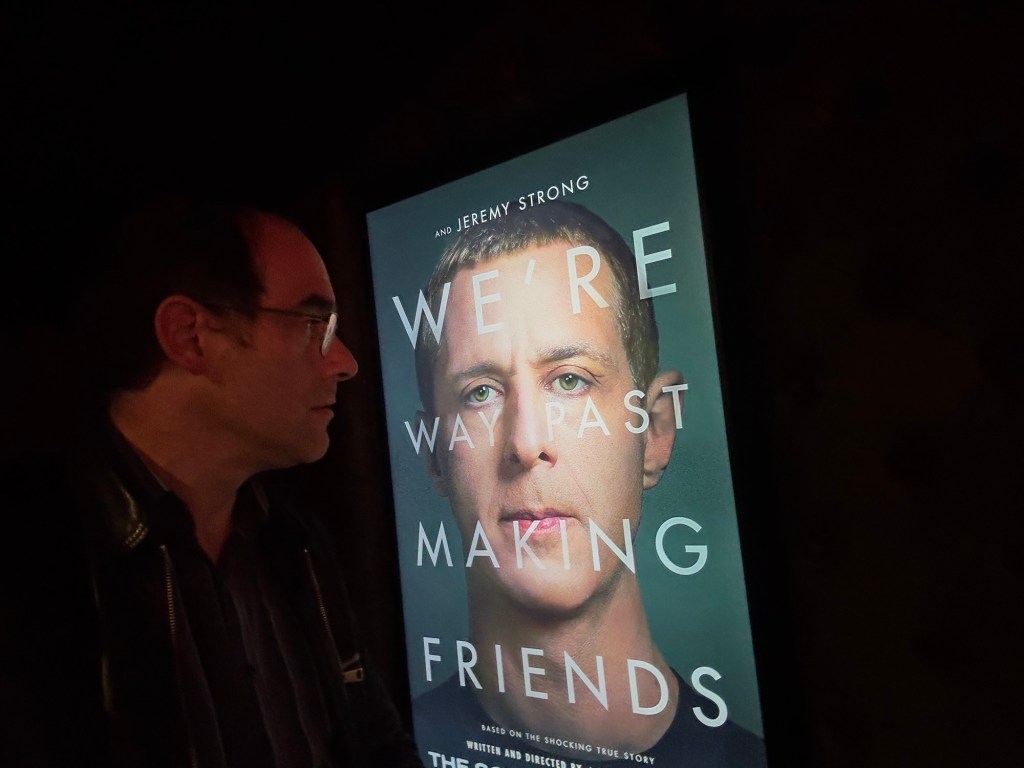
If ‘The Social Network’ was about the creation of Facebook, ‘The Social Reckoning’ is about the consequences of what was created. Aaron Sorkin’s sequel feels like ‘All the President’s Men’ for the social media age: a whistleblower drama about the relationship between corporate power, political influence and the responsibility of individuals to expose wrongdoing.
Mikey Madison plays Frances Haugen, a Facebook data engineer who becomes increasingly troubled by what she discovers about the company’s algorithms. Facebook isn’t simply allowing people to communicate. It’s encouraging them to engage, remain online and consume ever more material. What keeps them engaged is anger, misinformation and increasingly extreme opinions, which can be especially effective at holding people’s attention. And, of course, the more people engage, the more profitable the platform becomes.
It’s an unsettling proposition, particularly when the film draws connections between online radicalisation and the events surrounding the January 6 attack on the US Capitol. What makes the story disturbing is that nobody necessarily needs to set out deliberately to destroy democracy. A system designed to maximize engagement can produce dangerous consequences even when those running it insist they’re simply operating a successful business.
Mark Zuckerberg (Jeremy Strong), is more of a background presence here. He seems principally concerned with the company’s success and profitability, while the moral implications of its activities become somebody else’s problem. But the film’s real interest lies with Haugen and her relationship with journalist Jeff Horwitz (Jeremy Allen White). Together they must decide how to expose what they know and whether doing so is worth the personal and professional risks.
There’s something refreshingly old-fashioned about this drama. In another film, the relationship between the two central characters might easily have developed into a romance. But I was reminded of ‘A Few Good Men’, also scripted by Aaron Sorkin, where Tom Cruise and Demi Moore have precisely the sort of relationship that Hollywood might normally turn into a love affair. Instead, their intimacy is professional. They come to understand and trust one another because they’re working towards something they believe matters. The same is true here. The relationship develops through a shared moral purpose rather than romantic attraction, and that’s much more interesting.
At its heart, ‘The Social Reckoning’ asks a deceptively simple question: what is the right thing to do, and how far are you prepared to go to do it? Haugen isn’t confronting a single corrupt individual. She’s confronting an enormously powerful corporation whose business model depends upon precisely the practices she’s questioning. And that raises the film’s most important issue: should Facebook be responsible for fact-checking what appears on its platform, particularly political advertising? Is it merely providing a space for people to express themselves, or does it have a responsibility for the material its algorithms actively promote?
There’s an important distinction between allowing somebody to say something and constructing a system that ensures millions of people encounter it. Sorkin turns these questions into an engaging whistleblower thriller, but the implications extend well beyond Facebook. If ‘The Social Network’ showed us young people building a company that would change the world, ‘The Social Reckoning’ asks whether anybody properly considered what kind of change they were creating.
It’s also a call to action, reminding us that institutions rarely hold themselves accountable without individuals prepared to challenge them. And perhaps that’s the film’s most troubling observation. We used to worry about whether people were telling the truth. Now we also have to worry about whether the truth is sufficiently engaging for anybody to see it.




Leave a Reply